Ashfaq baig
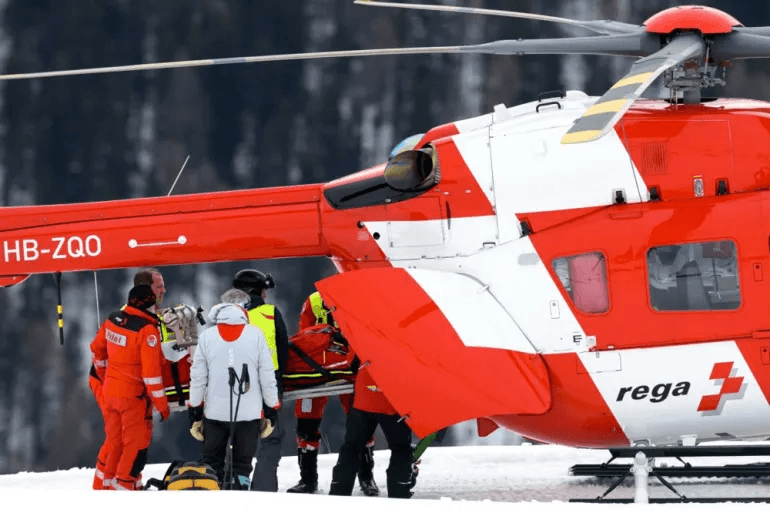
The Alpine Ski World Cup season has marked by speed, (Olympic Champion) high expectations, and now, growing concern. Two-time Olympic gold medalist Michelle Gisin of Switzerland has airlifted from the course by helicopter after a terrible crash. The accident happened during a downhill practice run in St. Moritz, Switzerland, on a cloudy Thursday morning.
Gisin, a 32-year-old star who won gold in the Alpine Combined event at the last two Winter Olympics, was going incredibly fast. She has clocked at over 110 kilometers per hour (69 miles per hour) when she lost control. The crash is a major setback for the Swiss women’s team. It adds a frightening name to a list of injured champions just two months before the 2026 Winter Olympics in Milan-Cortina, Italy.
What exactly happened on the mountain? And why does this crash feel like a crisis for one of the world’s best skiing nations?
The Crash: A High-Speed Loss of Control
The crash happened as Gisin was approaching a difficult, fast left-hand turn on her home snow course in St. Moritz. Downhill skiing is the most dangerous and fastest event in Alpine racing. The athletes have focused on shaving off tiny parts of a second, often taking big risks.
What Went Wrong?
- Catching an Edge: Reports from the course suggest one of Gisin’s skis “caught an edge.” In skiing, this means the metal side of the ski blade dug too aggressively into the snow. At such high speed, this tiny mistake caused a complete loss of control.
- The Impact: Once she lost control, Gisin has shot straight off the course. She hit the safety fencing, crashing through the first layer of safety nets before stopped by the second set.
- Medical Response: Race officials quickly stopped the run. Star US skier Lindsey Vonn, who has on the course at the time, has held at the start gate. Medics rushed to Gisin. Television cameras showed Gisin was conscious and lying by the course, but she had visible cuts and scratches on her face. Because of the high speed of the crash and the potential for serious injury, a helicopter has called in to airlift her from the mountain.
As of now, the Swiss Ski Federation has given no immediate report of any injury. Fans and the media are waiting anxiously for news on her condition. The speed and impact suggest she has likely checked for concussions, knee injuries, and other serious trauma common in downhill skiing.
The Swiss Speed Team Crisis
Gisin’s crash is not just an unlucky accident. It is the third major training crash for the Swiss women’s speed team in the past month. The team is now facing a severe crisis of leadership and experience just before the Olympic season fully begins.

Gisin was the veteran leader of the Swiss team. She was carrying the heavy weight of expectation following earlier injuries to her teammates. Now, the list of champions who have crashed includes:
- Lara Gut-Behrami (Olympic Super-G Gold Medalist): She suffered a bad crash in practice last month in Colorado. She tore the ACL (Anterior Cruciate Ligament) in her left knee. This injury has sadly ended her Olympic season.
- Corinne Suter (Olympic Downhill Gold Medalist): She crashed while training, also in St. Moritz, last month. She suffered injuries to her calf, knee, and foot. She is expected to be off skis for about a month.
- Michelle Gisin (Two-time Olympic Alpine Combined Gold Medalist): Her crash now adds her to the list of major injuries.
The Swiss women’s team won seven Olympic medals at the last Winter Games in Beijing. These three athletes won nearly all of those medals. The series of crashes is now a massive problem for the team. The remaining skiers will have to face the pressures of the World Cup season without their star leaders.
Why Do These Crashes Happen?
High-speed skiing accidents are a regular, dangerous part of the sport, but a series of crashes like this raises questions about safety.
1. The Nature of Speed
In downhill and super-G, skiers race at speeds over 120 kph (75 mph). The smallest mistake—a shift of weight, a bump in the snow, or catching an edge—can lead to a disaster. The forces on the body during a high-speed crash are huge. They often result in knee, back, or head injuries.
2. Training Pressure
Training runs are essential. Athletes push the limits to find the fastest line on the course. They use these runs to test new equipment and adjust their aggressive style. The pressure to perform and the risks taken in training are often as high as in the actual race.

3. Course Conditions Olympic Champion
The weather in St. Moritz was reported as cloudy on the day of Gisin’s crash. Cloudy, flat light can make the snow look flat. This makes it very hard for skiers to see bumps, shadows, and changes in the snow surface. When a skier cannot see the snow changes, they are more likely to make the small mistake that leads to a big crash.
The Road to Milan-Cortina 2026
The Winter Olympics are set to open in February 2026. This crash series is a dark cloud over the Swiss team’s preparations.
- Impact on the Team: Gisin was the athlete the team was counting on to step up in the absence of her injured teammates. Her crash leaves a massive hole in the team’s leadership and medal hopes. Olympic Champion
- Psychological Effect: This string of serious accidents creates a psychological challenge for the remaining team members. They must now compete while knowing that their champions have been injured on the same courses. This fear can cause racers to hesitate, which in a sport of small margins, can cost them a medal. Olympic Champion
- Long-Term Recovery: Gisin, known for her fighting spirit—she won a gold medal in 2022 after battling a serious case of glandular fever—will face a long and hard path back to the top if her injuries are severe. Her fans are hopeful she can make another one of her famous comebacks. Olympic Champion
For now, the World Cup circuit continues. But for the Swiss team and for all of Alpine skiing, the focus is not on the races this weekend. It is on the hospital, waiting for news on the health of one of the sport’s greatest champions. Olympic Champion
Read More Articles Click Here. Read Previous Articles Click Here.
About The Author